Millions come from afar hoping to glimpse at Mona Lisa. Yet of five Leonardo da Vinci paintings in the Louvre, only one has admirers lining up. Why?
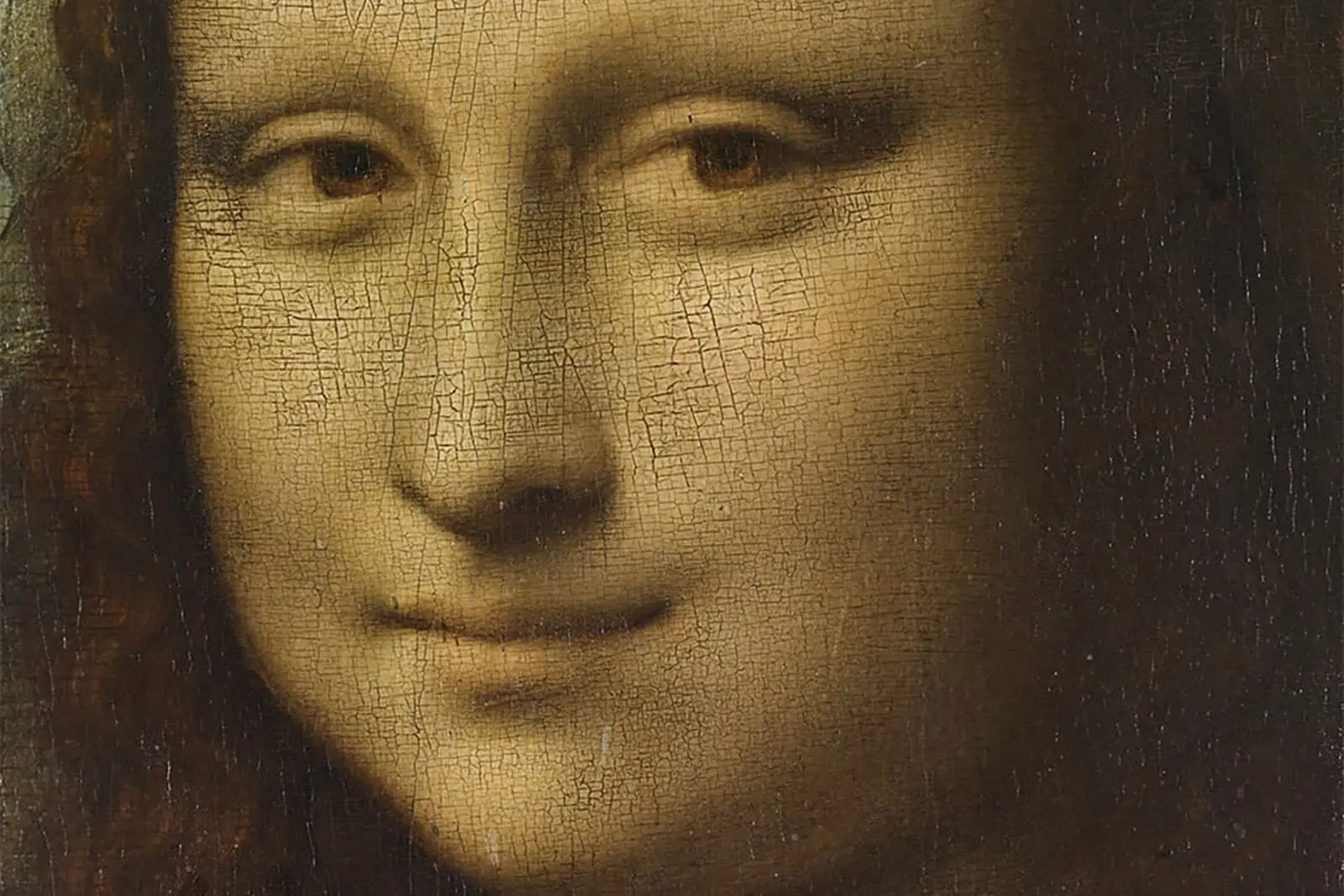
Is it her smile? Why is the Mona Lisa famous? Photo © Musée du Louvre / Michel Urtado.
There are two sides to Mona Lisa's story. First, that it's the most famous artwork in the world. Second, hidden behind the fame, lays a rare masterpiece by one of history's most influential artists, Leonardo da Vinci.
To understand Mona Lisa, one must first discover the accident of fate that made her a global icon. Only then can we marvel at the painting underneath.
A Thief Alone In The Louvre Museum

Reconstitution of the theft of the Mona Lisa.
It was a quiet morning in August 1911. The Louvre was nearly empty, and a man entered the museum and walked through its corridors unnoticed.
There was an embarrassment of riches to tempt him, starting with a 140-carat diamond. Or he could have taken gold objects to melt them and would have never been caught.
He slipped past gilded frames, but having worked in the Louvre installing protective glass, Peruggia was familiar with the museum's layout and knew exactly how to extract paintings from their housing.
Confessing later, Peruggia explained:
"On a morning in August, at about 7.30, dressed as a worker in a white linen smock, I went to the Louvre and entered through a back door where workers were also entering.
I found myself in the Salon Carré, and my choice, with no premeditation, fell on the Gioconda by Leonardo da Vinci."
The only reason he chose the Mona Lisa, at the last minute, was that it fit under his smock...
He still had to get out. The first hurdle was a locked service door; taking apart the doorknob was useless. A plumber, thinking he was an employee, kindly unlocked it. The last obstacle, a heavy door to the street, stood open.
The next day, a painter came to copy la Joconde, as she is known in France. Where was she?
The director, on holiday, had boasted, "steal the Mona Lisa? That would be like thinking that someone could steal the towers of Notre Dame cathedral."
And the Arts Minister was away, having ordered, "don't call me unless the Louvre burns down or the Joconde is stolen."
Mona Lisa was gone.
Keystone Cops Seek The Mona Lisa

A crowd looking at the four nails that held Mona Lisa, or leaving roses. The police guarding the entrance of the Louvre.
No less than 60 policemen scoured the Louvre in search of clues. The top officer in charge sounded confident. "The theft took place on closing day, we know who came in and out, this investigation will only take two to three days."
The police arrested two Germans, the poet Guillaume Apollinaire, Pablo Picasso, and searched all passengers of an ocean liner about to set sail. In New York, police searched another ship for the painting.
Yet Peruggia had left a thumbprint on the glass securing the painting. His fingerprints and photo were already in police files, as he had been arrested before.
The police knew he had helped make the protective glass and that he wasn't at work at the time of the robbery.
Twice, police asked Peruggia to come to the station, and he never came. The police turned up at his flat and believed his explanations. A detective searched the small room, failing to see the painting.
While police took every museum employee's fingerprints, they didn't ask Peruggia for his. They also forgot to add his name to the list of fingerprints to check against police records.
Several Louvre curators pointed towards glaziers as prime suspects. They argued that someone involved in Mona Lisa's box frame construction would have known how to open it in minutes. A curator investigated, listing all the names involved, including Peruggia's.
The examining judge ordered the police to look into this. The police, treating curators with contempt, chose to ignore the correct lead. Mona Lisa was only two miles from the Louvre, in Peruggia's cupboard.
Competition For Mona Lisa Crackpot Theories
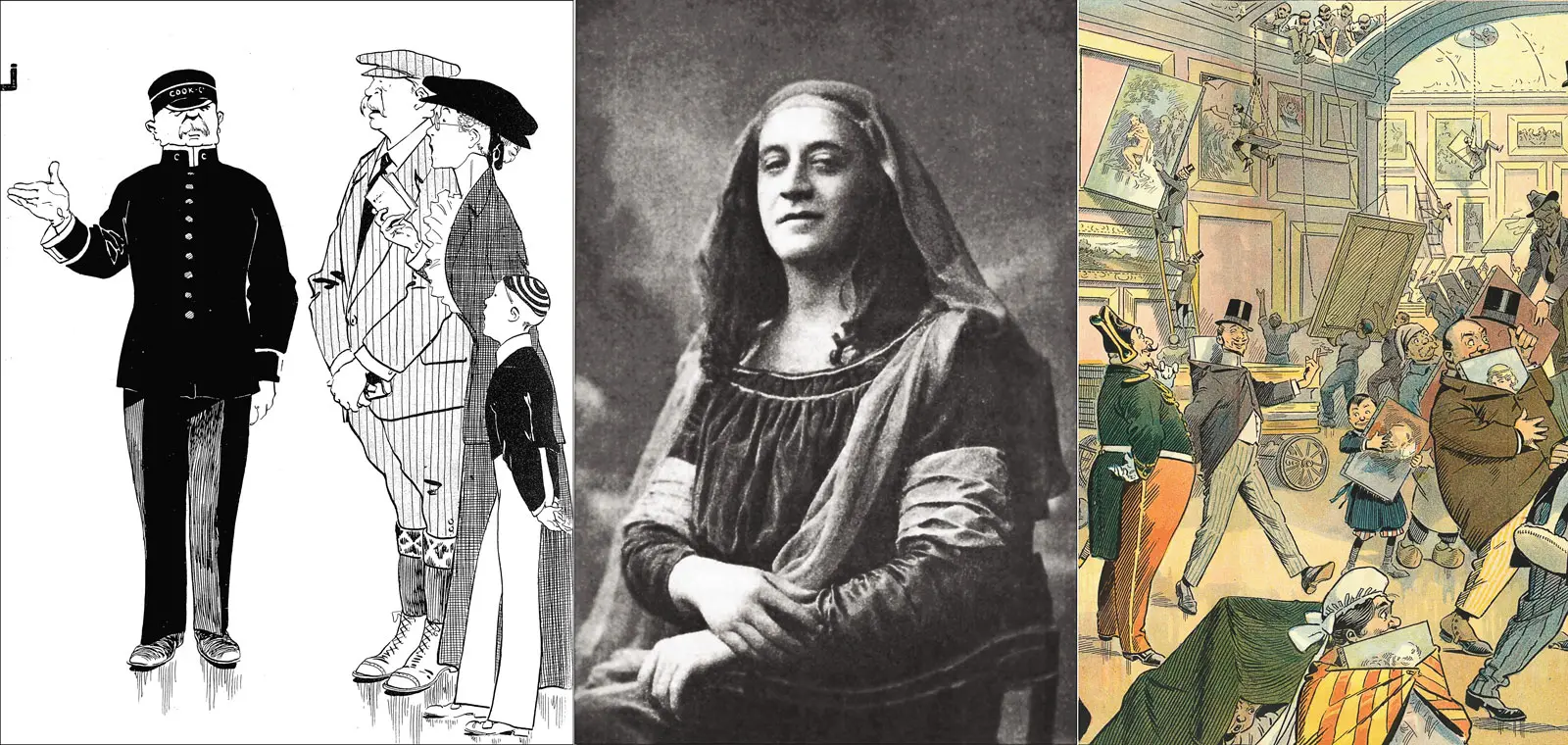
A caricature of the public admiring the nail used to hold Mona Lisa. Actor Raimu as la Joconde, for his successful play 'she's got the smile', only one month after the theft. The American press joining in the fun.
A contest for eccentric stories started within days. One newspaper interviewed Mona Lisa; others speculated that it must be a 'crime of passion.' Or that Arsène Lupin was involved. Movies and popular songs poked fun at the whole thing.
Newspapers offered financial rewards for information. For over two years, people sent hundreds of false leads to the police and the press. Any story about the painting would help sell millions of copies.
The day before the theft, the Mona Lisa was only one masterpiece among thousands. The day after the theft, the media of the time turned a painting that few paid attention to into a meme, an icon, a famous thing.
This sentenced her to a 'prison of fame.' The hunger for headlines about the Mona Lisa continues to this day, leading people to open tombs in search of Mona Lisa's skeleton.
Hoping to do a facial reconstruction to 'reveal' if she was truly the woman Leonardo painted, desecrating the dead for the sake of ratings.
While it might look like harmless fun, this ever-growing need for outlandish revelations directly endangers the Mona Lisa, which is why a painting needs to be protected by bulletproof glass.
In 1956, it started with an acid attack, then a man casting a rock at it. In 1974 it was red paint. Recently, people threw a coffee cup, cream tart, and soup.
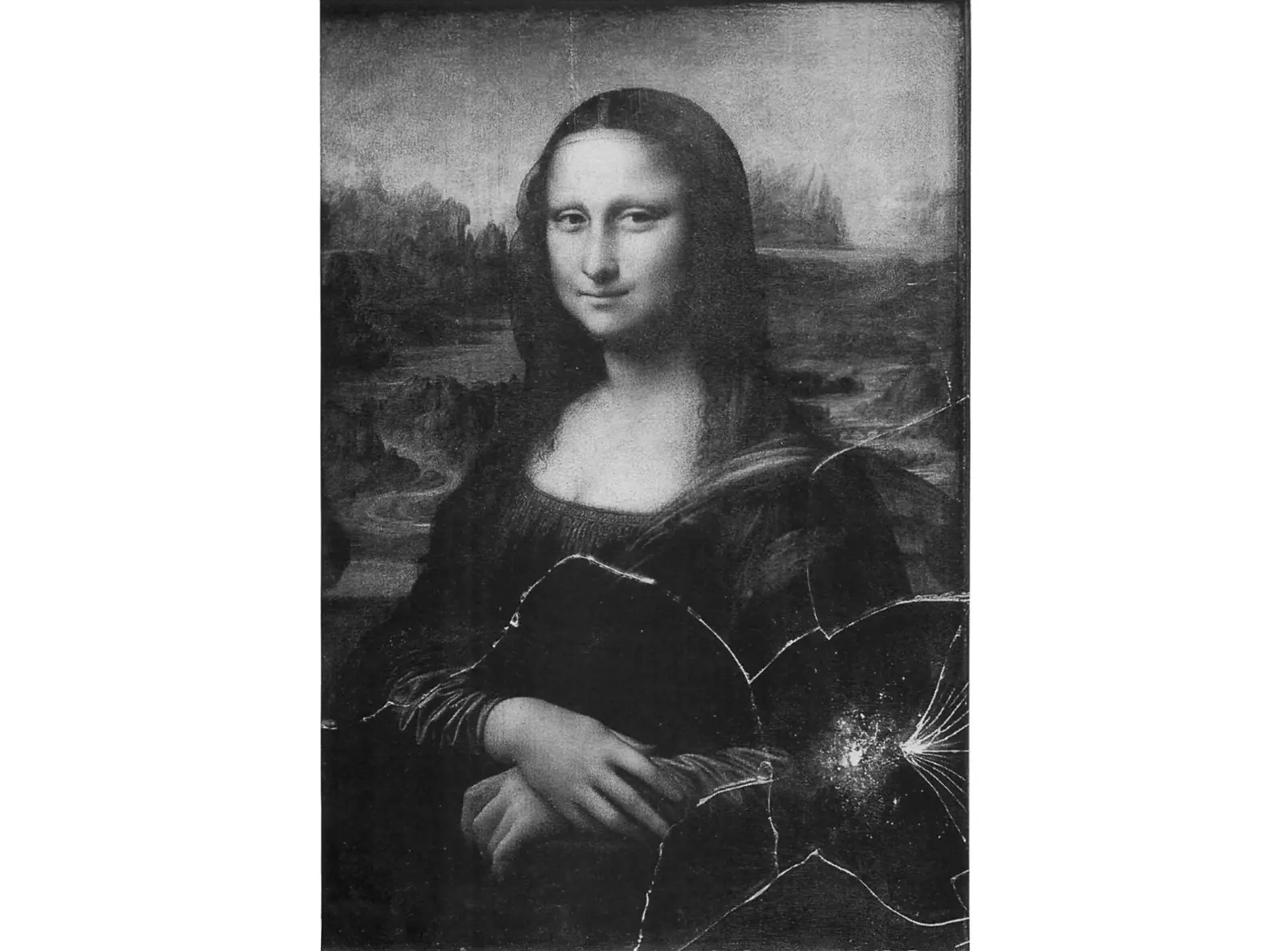
Mona Lisa after having been attacked with a rock in 1956. Glass shards did damage the painting. Photo archives de la DMF / Musée du Louvre.
Theft Made Mona Lisa Famous For Being Famous

As soon as Mona Lisa returned to the Louvre, a fence kept the public at bay, and a policeman kept watch. Before the theft, there was no line in front of Mona Lisa.
Being stolen turned a painting into an overnight sensation. A witness described being "in the company of numerous other curious visitors, to stare at the empty space on the wall of the Louvre where the famous lady had hung."
Had Peruggia stolen any other artwork—provided it could fit under his coat—, it would be the subject of books and movies.
The same painting that no one looks at today would be mobbed. Before the theft, Mona Lisa did get attention from art lovers and artists who wanted to learn from masters. Exactly like for the Venus de Milo, they praised it as an artistic wonder.
And it's not like admiring the painting was a pleasure restricted to an elite. An 1867 guidebook explained the Mona Lisa to the non-specialist public.
"One of the Louvre's most precious jewels.
The very famous portrait of Monna Lisa, also known as la Joconde.
Few masterpieces inspire such enthusiastic admiration as this painting.
Not everyone will understand its merit at first glance,
but after a few moments of attention,
the beauty of this work will shine through."
Entry to the Louvre was free, so the only requirement to appreciate the Mona Lisa was "a few moments of attention." The robbery gave Mona Lisa two identities.
The old one was a masterpiece by Leonardo da Vinci. The new, overbearing one, the myth. That string of attacks is the reason Mona Lisa is protected by bulletproof glass today.
Stole Mona Lisa, All He Got Was A Lousy Jail Term

Peruggia's modest Parisian room.
After having kept Mona Lisa for two years, Peruggia saw in Italian newspaper adverts by antique dealers offering good prices. With the Mona Lisa hidden in the bottom of a trunk, he took the train to Florence.
There, the merchant he negotiated with contacted the Italian authorities. The painting sat under his bed, and police arrested Peruggia. He claimed he only was trying to return it to Italy, believing Napoléon stole it.
But money was in his mind. Before the theft, his notebook contained names like Rockefeller and Carnegie, the billionaires of the time.
He had even traveled to London to try to sell Mona Lisa. Peruggia wrote to his family that "this fortune that I've been seeking and dreaming about for a long time is about to become reality."
Peruggia's claims of patriotic duty got him a lenient sentence, seven months in prison. During the trial, the expert psychiatrist described him as simple-minded. He called himself a "poor devil."
Yet a man who stole the Mona Lisa without being noticed and escaped the French police. Who crossed the Italian border without being caught.
On the other hand, what profit did he make? Peruggia couldn't even pay his hotel bill. The man who had committed the most notorious art theft in history didn't make any money from it.
While the thief earned short-lasting fame, the Mona Lisa became world-famous. Everywhere she went, Florence, Rome, and Milan, crowds gathered.
A newspaper described "Florentines in riot over 'Mona Lisa'. Crowd of 30,000 sweeps police aside in mad rush to see stolen painting."
A Superstar Travels To America, Japan And Russia

Presidential welcome, Washington, 1963. In the Met, with up to 63,675 visitors per day, a few seconds per person. Mona Lisa in Moscow, 1974. - Photos R. Knudsen / JFK Presidential Library; Metropolitan; A. Konkov, V. Cheredintsev/TASS.
In 1963, Mona Lisa traveled to the US, greeted by President John F. Kennedy.
"This painting is the second lady that the people of France have sent to the United States,
and though she will not stay with us as long as the Statue of Liberty, our appreciation is equally great".
JFK also added that in 1913, when "Mona Lisa was carried through the streets to the Uffizi Gallery, people bared their heads as a homage to royalty."
Nearly 1.6 million people queued to see her at the National Gallery and the Metropolitan Museum.
Surrounded by police and security, no wonder one might think royalty has arrived. Her last trip was in 1974, to Tokyo and then Moscow. By that time, she hid behind bulletproof glass.
The most famous artwork in the world is also probably the most viewed, if only for a few seconds. That might be why, after a long wait, many viewers are sorely disappointed.
What Is So Special About The Mona Lisa?
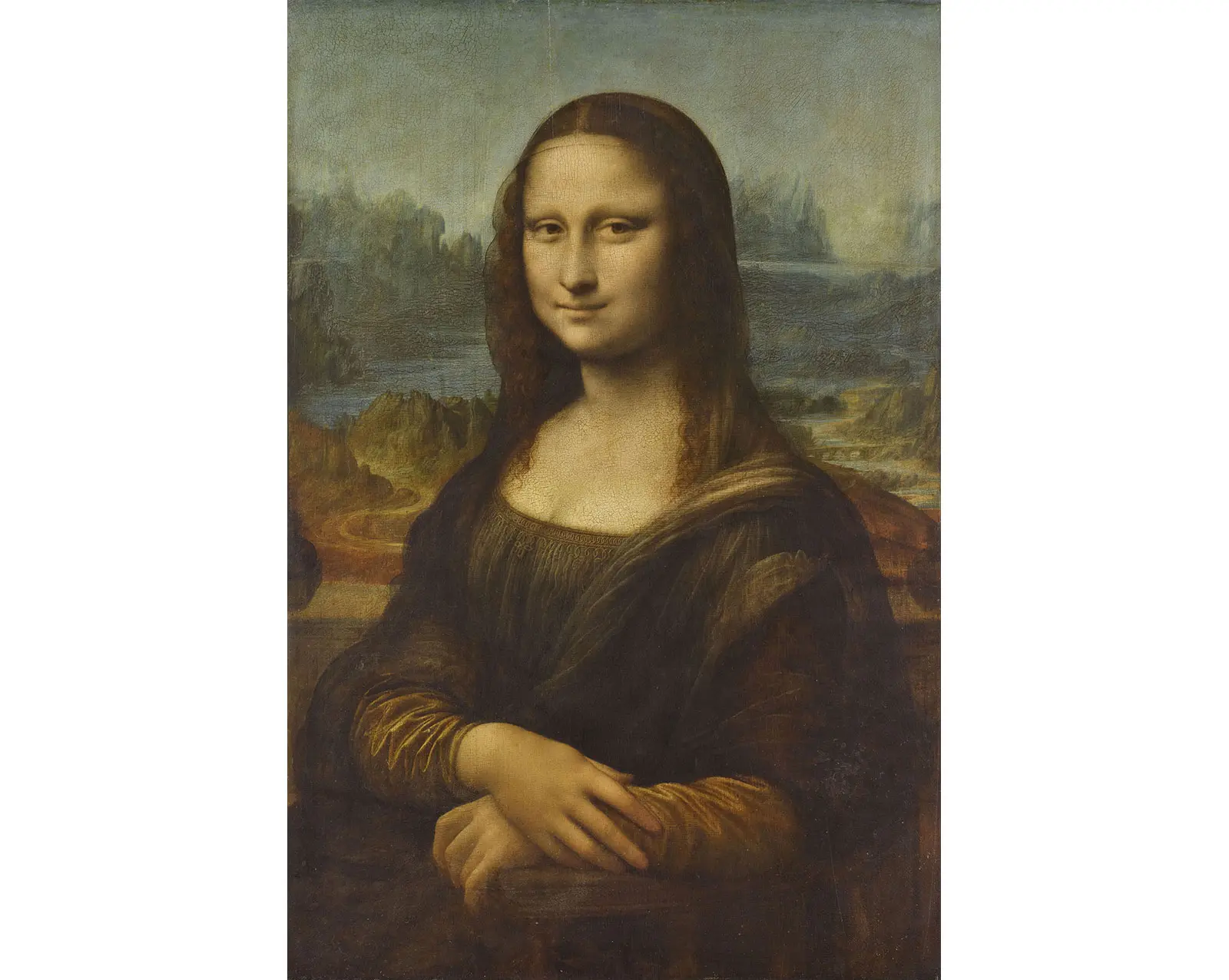
Mona Lisa, 1503-1518. Acquired in 1518 by King Francis I, kept in the French Royal collection, then the Louvre museum since 1797. Photo © Musée du Louvre.
– Why is it so small?
— It is not small, on the contrary, it is the biggest portrait that Leonardo has ever painted. Like all portraits, it is roughly lifesize.
– She looks at you!
— Yes, like plenty of great artworks. If a painter can turn a few drops of color into living eyes, an opening into someone's soul, then the painting is most likely a masterpiece.
– Her smile is enigmatic.
— More on the smile below.
– We don't know who she is!
— We do... This isn't a painting that was discovered in an attic. It was brought to France by Leonardo da Vinci himself in 1516 and has been there ever since.
Why Is It A Masterpiece?

A simple answer would be that it is a Leonardo da Vinci. There are only around fifteen paintings by the Renaissance genius, and five are in the Louvre.
Yet, none of his paintings are signed. Leonardo was born at a time when an artist was considered little better than a craftsman.
An artist made a living thanks to a patron, a powerful person commissioning artworks. When Leonardo searched for work, he wrote the Duke of Milan a CV-like letter.
In it, he made a ten-point list of the things he could do. Nine were about war machines. The last point was that he also was an architect.
And almost as an afterthought, that he could also paint anything, as well as anyone.
Today we see art as something artists make out of their own free will and science entirely separate from art. But this strange mix between engineering, anatomy, science, and art is one of the reasons why Leonardo's art is extraordinary.
With Mona Lisa, at least three aspects explain why the painting is a masterpiece.
— The eyes. Leonardo's scientific, anatomical and artistic pursuits allowed him to paint the "mental movements" of a figure.
— Leonardo's technique, the sfumato.
— That enigmatic smile.
Meaning Of A Smile, Lisa del Giocondo's Story
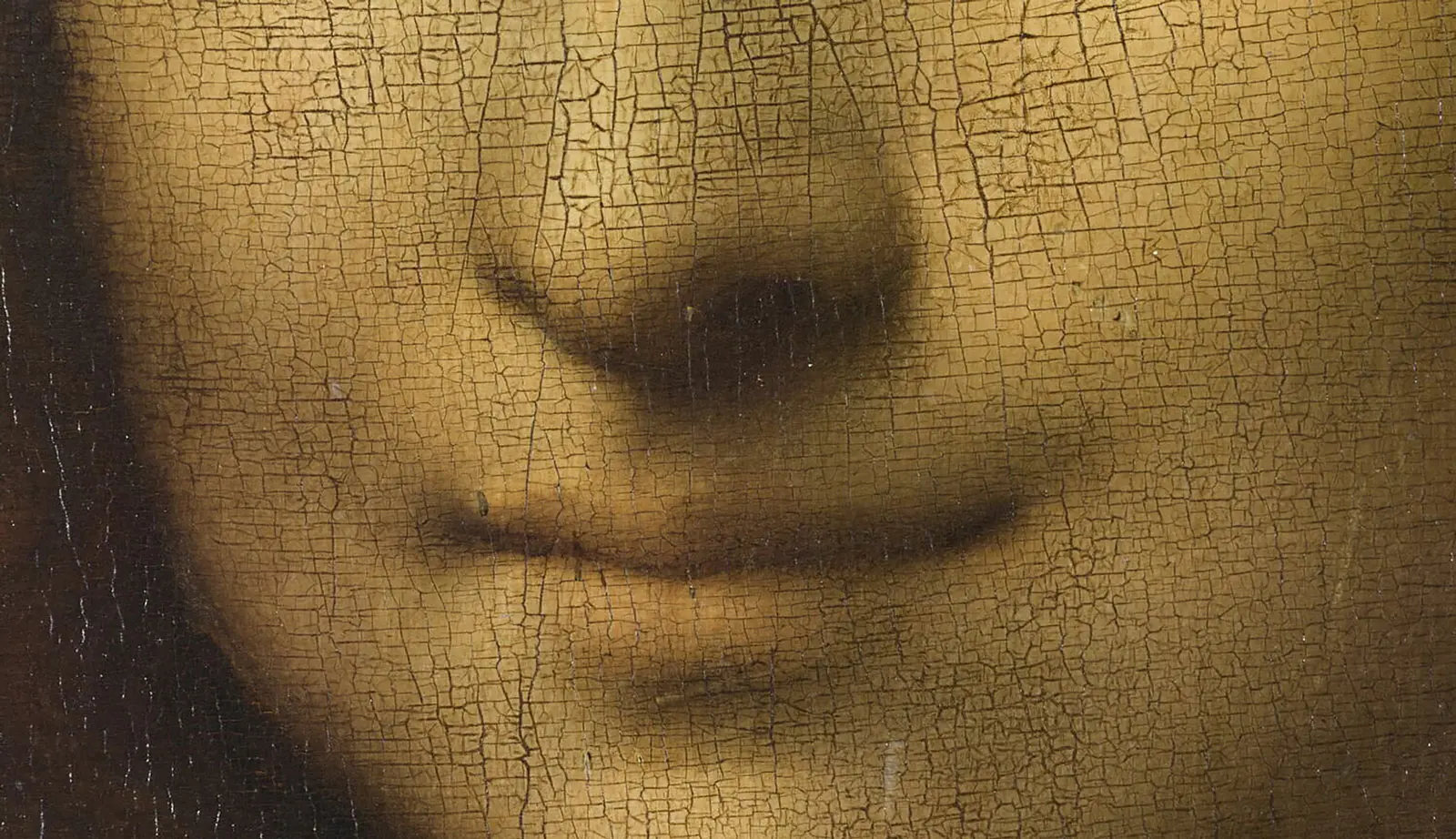
To understand the rarity of Lisa's smile, one must remember that the Bonfire of Vanities took place only half a dozen years before Leonardo painted a smiling woman. Instruments of joy, music, poetry, painting, and sculpture masterpieces were all thrown into the fire.
One must also realize that few people had the privilege to have their portraits done by a master. Religious figures, Dukes, and Kings needed to be seen as solemn and powerful. An artist had to do whatever the client requested.
That is how masterpieces show someone charging to victory when the person depicted had never been near a battlefield.
While a noble lady pestered Leonardo for a portrait, he chose instead to paint the bride of a silk merchant.
No known contract exists between Francesco del Giocondo and Leonardo, suggesting an unpaid favor between neighbors: the Giocondo home sat around the corner from Ser Piero da Vinci, the notary whose illegitimate son was a painter named Leonardo.
The bride, Lisa Gherardini, became Madonna (Madam) Lisa del Giocondo.
The Giocondo family, Francesco, Lisa, and their children, had just moved into a new home. A husband was meant to admire the portrait proudly, children lovingly, the first reason for Lisa's smile: family bliss.
The other is the meaning of her name, Giocondo. It comes from the Latin jocundus, agreeable, pleasant. Still used today as jocund, meaning in a happy mood, merry, cheerful.
Leonardo added symbols revealing names in portraits. For Ginevra Benci, the juniper tree behind her means 'Ginevra'. For Cecilia Gallerani, the ermine was a play on words for her name and the Duke of Milan.
For Madonna Lisa del Giocondo, shortened into Monna Lisa, the smile is her name. La Gioconda, la Joconde, the happy one.
Leonardo Da Vinci, The Painter Of Smiles

Leonardo da Vinci; John the Baptist, the Virgin of the Rocks, Saint Anne and the Virgin Mary. Photos © Musée du Louvre.
In the Louvre, out of 35,000 artworks, there are only a dozen portraits that smile... A third of the smiles of the Louvre are by Leonardo, so one could almost see Lisa's smile as Leonardo's signature.
Leonardo never delivered the painting to Francesco and Lisa. He kept it, free to express his ideal vision. He gave an unassuming woman the nobility of a lady of high rank and the majesty of the Virgin Mary.
He took the painting to France, selling it to King Francis I. Then the artist Vasari wrote about Leonardo's life, with particular praise for the Mona Lisa.
"There is a smile so pleasing that it seems more divine than human, and it was considered a wondrous thing that it was as lively as the smile of the living original.
It can be said that portrait was painted in a way that would cause every brave artist to tremble and fear, whoever he might be".
Vasari noted the artist's figures' grace, tenderness, smiles, and joy resulted from "Leonardo's intellect and genius."
Speculation about Mona Lisa's identity continues. Vasari described that Leonardo did "for Francesco del Giocondo, the portrait of Monna Lisa, his wife". That the painting was "at Fontainebleau today in the possession of King Francis."
A document from 1503 specifically mentions Leonardo painting "the head of Lisa del Giocondo."
The painting is unsigned, with no inscription naming the woman. There are thousands of nameless portraits, and no one but scholars cares about who they may be.
Yet, only one painting gets headline chasers to desecrate the dead in search of fifteen minutes of fame.
Mona Lisa, An Elusive Ghost
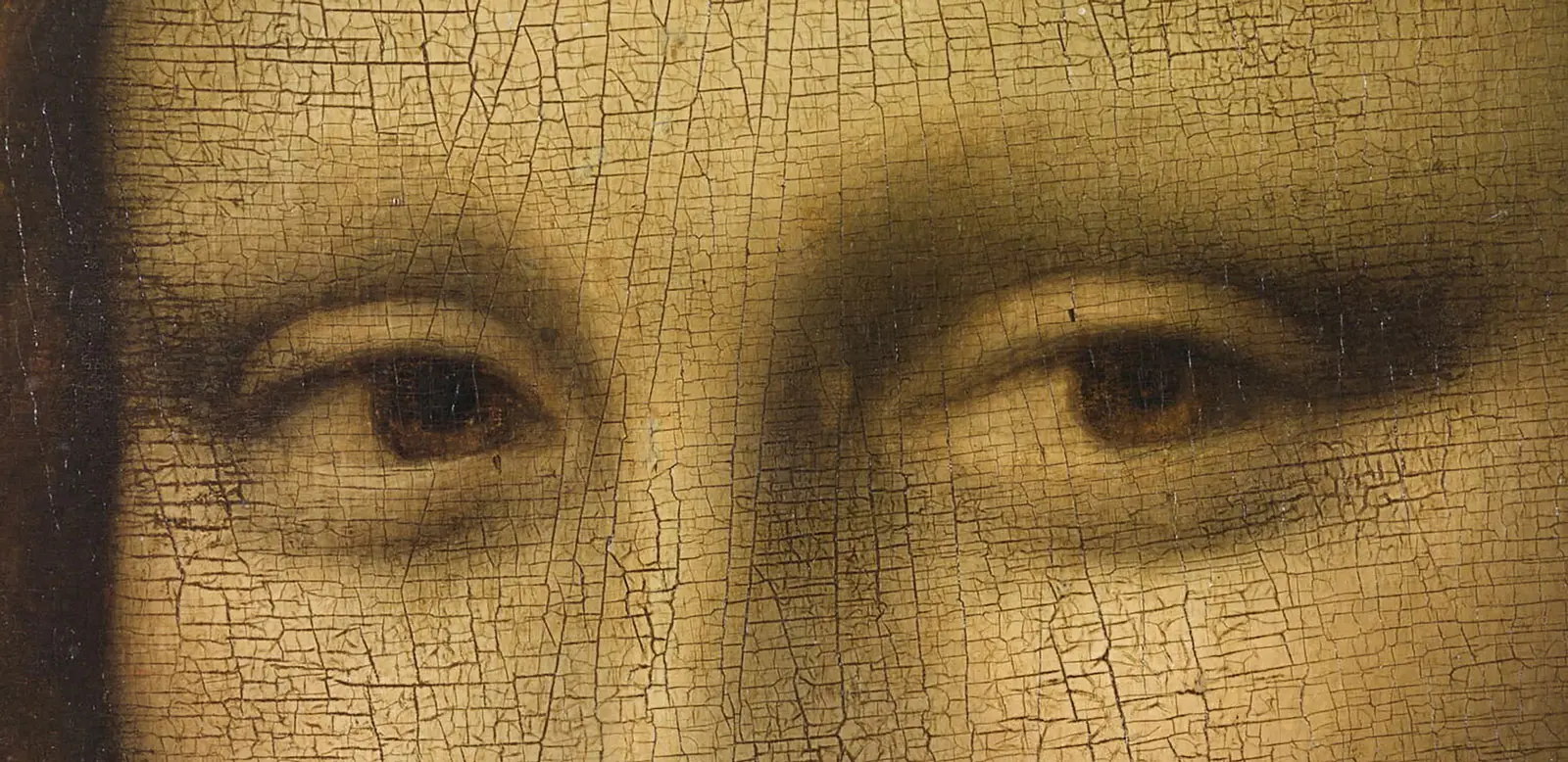
Renaissance painters created the illusion of three dimensions for faces with black outlines, almost like a colored sketch, or with layers of color. Hence, a nose is either delineated with a line or built up with varying hues of skin color.
Leonardo studied clouds, muscles, and waterfalls, always experimenting, until he mastered the sfumato, a technique that means 'smoky'.
Leonardo's faces are painted with that 'transparent smokiness', adding thin layers of shade to end up with a vaporous transition between light and shadow.
The Mona Lisa is a fragile masterpiece needing constant attention and regular study. Usually, an X-ray resembles a black-and-white version of the painting. What is astounding is that all the layers of shadows put together are thinner than human hair, which is why Mona Lisa vanishes from X-rays.
The Italian experts of 1913 prove the point another way. They had to decide if the painting stolen by Peruggia was the real thing or not. A mistake meant losing their reputation and creating a diplomatic incident.
For Mona Lisa, the experts looked at the sfumato, eyes, and smile. Within a few seconds, they just knew.
Yet a few seconds is what most people get, and why the Mona Lisa was recently voted the world's most disappointing masterpiece.
But as a guidebook states, all one needs is a few moments of attention, and the beauty of this work will shine through
.
Consider that Leonardo was likely never paid for painting the Mona Lisa. That he spent a dozen years working on it, at the height of his powers. Not to please a Pope or King, but the greatest perfectionist there ever was: himself.
Since the Mona Lisa was, in Leonardo's eyes, the most important portrait he's ever done, isn't that plenty enough?
Where was the Mona Lisa during the Second World War?

The Mona Lisa was hidden during the second world war. Left, a guard standing next to the box containing the Mona Lisa, the three dots being the mark few knew that it meant la Joconde. Right, Montal castle, in 1943. It is not poetic licence to say that curators and museum guards lived and slept among the Louvre treasures. Photos Archives Nationales.
Above is an extremely rare photo showing the whereabouts of the Mona Lisa during the Second World War. The Louvre was emptied of its masterpieces before the German invasion thanks to the Louvre director, who successfully saved masterpieces from the Nazis.
The Mona Lisa was first on the list of artworks taken to safety from the Louvre in August 1939, before the war was declared. Here we see a Louvre guard posing near a box with three red dots, a code that very few people knew meant 'La Joconde', the Mona Lisa.
This also settles a persistent myth. Because two postwar documents mention the Louvre's Mona Lisa
among the art the Nazis stored in the Altaussee salt mine in Austria, some claim the Germans seized it.
The painting the Monuments Men found in the mine was a copy. The original never left French hands. It is no exaggeration to say curators and guards slept beside it.
She was safeguarded in castles (Chambord, Louvigny, Montal), an abbey (Loc-Dieu), and the musée Ingres in Montauban.
In 1944, the message the Allies read out on the BBC to confirm they received the location of the art treasures was la Joconde a le sourire,
the Mona Lisa is smiling.
How To Enjoy The Mona Lisa Today, In An Age Of Overtourism
How can one appreciate the Mona Lisa? Forget the myth, the crackpot theories, the fame. Lower expectations, this is not an immense painting, it is only the life-size portrait of a lady who sits on a chair.
Start with a fresh eye. Follow the old guidebook recommendation, "after a few moments of attention, the beauty of this work will shine through."
Look at it for what it is, the portrait of a woman, no more, no less. There is no hidden meaning, no mystery. Looking calmly and intently is all that's needed. Wander between the detailed face and atmospheric background. Then concentrate on the eyes, nose, and mouth. It should be when one realizes what Leonardo could do with barely visible layers of shade.
The numbers explain the overtourism issue. The Louvre welcomed nine million visitors in 2025, more than double what was planned when the pyramid was built.
So the Louvre now caps daily admissions at 30,000, with over two-thirds heading straight for the room housing the Mona Lisa alone. A "Louvre New Renaissance" plan announced in 2025 will eventually give the painting its own dedicated room with a separate, timed-entry ticket, but that isn't due to open before 2031.
The reality, in 2026, is that most visitors see a crowd and only glance at the painting for a few seconds. Yet, there is one workaround to admire the Mona Lisa quietly, the only time when it would be advisable to view a photo instead of the real thing.
View a high-definition photograph and look up close, for as long as you wish, at the Mona Lisa.
And if you come in person, remember that the Louvre doesn't display one Leonardo da Vinci masterpiece, but five, nearly one-third of the entire career of the genius.
Sources
— The Louvre curators who informed the police that the glaziers were prime suspects of the theft of the Mona Lisa were Paul Leprieur, Jean Guiffrey, Pierre Marcel, and Louis Pujalet.
— The Italian experts in Florence were Giovanni Poggi, director of the Uffizi, and Corrado Ricci, director of the Fine Arts for the Italian ministry, as well as Luigi Cavenaghi, who restored Leonardo's Last Supper.
— The visitor of the Louvre in 1911 wondering at the empty space was Franz Kafka. And to get an idea of how the Mona Lisa might look like without its varnish, one can look at the "Prado Mona Lisa" workshop copy.
— Jérôme Coignard. Une femme disparaît – Le vol de La Joconde au Louvre en 1911.
— Mona Lisa: The People and the Painting, by Martin Kemp and Giuseppe Pallanti.
— Archivio di Stato di Firenze.
— Noah Charney. The Thefts of the Mona Lisa: On Stealing the World's Most Famous Painting.
— Cécile Scailliérez. Léonard de Vinci, La Joconde.
— La piste du miroitier avait été signalée au juge instructeur mais la sureté ne daigna pas se déranger.
— M. Leprieur et M. Jean Guiffrey, qui dès le premier jour ont indiqué la bonne piste en signalant à la justice les ouvriers employés à la mise sous verre des tableaux et en fournissant une liste sur laquelle se trouvait le nom de Peruggia.
— Giorgio Vasari. Lives of the Most Excellent Painters, Sculptors, and Architects. Vasari had never seen the Mona Lisa, but was compiling, thirty years after Leonardo's death, information from people who worked for him and knew him. The fact a man who never saw the Mona Lisa could write in such detail about its quality shows how much impact it must have had on others.
— Carlo Pedretti. Leonardo da Vinci, or, The glory of painting.
— Dr. Laurence de Viguerie; Dr. Philippe Walter; Eric Laval; Bruno Mottin; Dr. V. Armando Solé. Revealing the sfumato Technique of Leonardo da Vinci by X‐Ray Fluorescence Spectroscopy.
— Arnaud Bizot. La Joconde kidnappée. Le vol qui déchaina les passions.
— Montal, Mona Lisa dans sa plus belle cachette.
— Bertrand Jestaz. François Ier, SalaÌ et les tableaux de Léonard. Revue de l'Art Année 1999.
Photos: Musée du Louvre, C2RMF, Gallica, Archives Nationales. Text is © Art Journey Paris.